
The Market Edit
Your Home Isn't New Anymore.
So What?
Real estate loves a grand entrance. But what happens when the spotlight moves on and the house is still for sale?
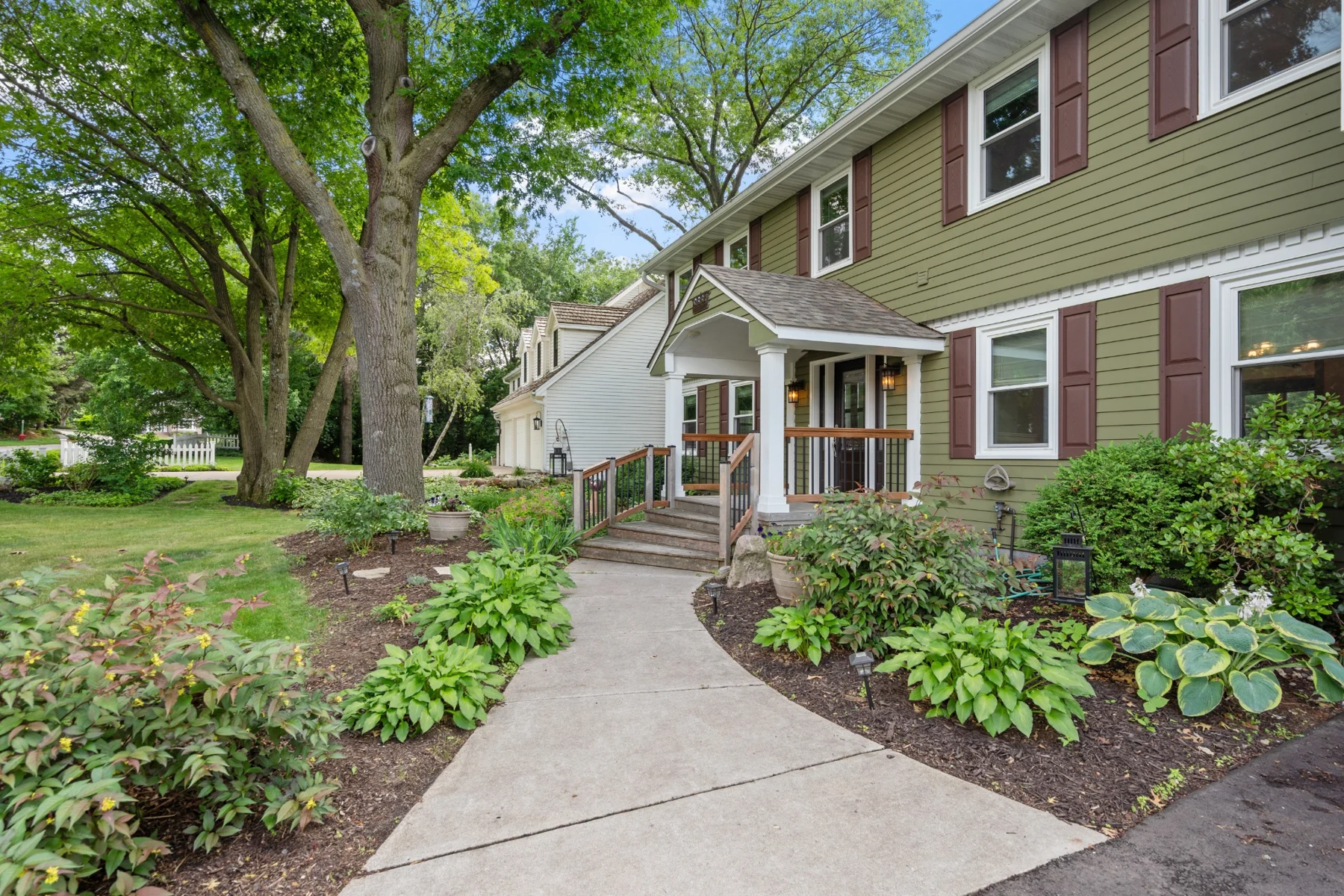
Days on market is information—not a verdict on a home. Sellers deserve ongoing analysis, honest conversations, and a strategy that evolves with the market long after the initial launch.
Real estate has a fascination with new.
New listings. New photographs. New opportunities. New to the market.
We announce them enthusiastically, promote them across every available platform, and give them the kind of introduction usually reserved for a highly anticipated opening night.
JUST LISTED!
And rightfully so. A home deserves an extraordinary debut. The preparation, photography, pricing, presentation, and marketing that go into launching a property are essential parts of creating a successful sale.
But I've been thinking about something that doesn't get nearly as much attention.
Why aren't we just as excited to talk about our oldest listings?
Not because they've been sitting. Not because we're announcing another price reduction. And certainly not because we need to manufacture enthusiasm for a property that hasn't sold.
I'm asking a more interesting question.
When did a home's arrival date become part of its identity?
A house can be the star of everyone's social media feed on Thursday and practically invisible a month later. The property hasn't moved. The backyard hasn't gotten smaller. The kitchen hasn't suddenly become less functional.
Yet something has changed.
The perception of it.
And in real estate, perception can have a remarkable influence on what happens next.
A house doesn't become less worthy of attention simply because it isn't new anymore. But somewhere along the way, we started behaving as though it does.
I think that's worth examining.
We've confused newness with desirability.
There's a reason buyers gravitate toward new listings. After weeks or months of searching, something they haven't seen before represents possibility. Maybe this is finally the house. Maybe this is the one that checks the boxes, fits the budget, and feels like home.
That anticipation is real, and it's a powerful part of the buying experience.
But novelty has an interesting effect on how we evaluate things.
A new restaurant generates excitement before anyone has tasted the food. A newly released product attracts attention before anyone knows whether it's actually better than what came before it. We are naturally curious about what's new, and we often interpret that newness as a reason to pay attention.
Real estate isn't immune.
The difference is that a house is not a seasonal collection or a product with an expiration date. Its fundamental qualities don't disappear because the market has already had a chance to look at it.
And yet, once a property has been available for a while, the conversation often changes.
Why hasn't it sold?
What's wrong with it?
There must be a reason nobody wants it.
Those questions aren't entirely unreasonable. A longer time on the market can signal a disconnect between a property's asking price, condition, location, or presentation and what buyers are willing to accept.
But there's a difference between investigating that disconnect and assuming the answer before you've asked the question.
Days on market is information. It is not a character assessment.
A home doesn't become a bad home because it hasn't sold quickly. And a home doesn't become a good value simply because it's been available for a long time.
Both conclusions are shortcuts.
The more useful question is what the market has actually told us about that property—and whether we're interpreting that information correctly.
The strange psychology of a house nobody has bought
Here's where this gets especially interesting.
Imagine two homes with similar characteristics, in comparable locations, offered at similar prices.
One was listed yesterday.
The other has been available for 65 days.
Which one catches your attention first?
For many buyers, it's the new listing. And not necessarily because the house is better.
The newer property feels undiscovered. The older one comes with a history, even if that history consists of nothing more than its listing date.
We begin looking at the second house through a different lens.
Instead of asking what we like about it, we start searching for an explanation for why someone else hasn't bought it.
That is a subtle but important shift.
The property is no longer being evaluated entirely on its own merits. It's being evaluated partly through our perception of other buyers' decisions.
But what do we actually know about those decisions?
Perhaps buyers thought the initial asking price was too high. Perhaps a competing home offered a more appealing layout. Maybe the property had fewer showings than expected, or the people who toured it simply needed something different.
There may be a legitimate issue worth investigating. There may also be several unrelated reasons the home hasn't connected with the right buyer.
The listing history alone cannot tell us which explanation is correct.
And yet, the longer a property remains available, the easier it becomes to treat its lack of a sale as evidence against it.
At some point, buyers can stop asking whether a house is right for them and start wondering why it wasn't right for everyone else.
That's an entirely different way to shop for a home.
It can cause buyers to overlook properties that deserve a closer look. It can also lead sellers to interpret silence as a judgment on the home itself, rather than as information about how the property is positioned in the market.
Neither reaction is particularly helpful.
The better approach is curiosity.
What has actually happened? What has changed? And what do we know now that we didn't know when the property first became available?
The market has moved. Has the conversation?
One of the things I find most fascinating about real estate is how quickly the environment around a property can evolve.
The housing market never stands still. It changes every day, every week, and sometimes with a single new listing or accepted offer.
A home that was competing against five similar properties last month may have only two comparable alternatives today. A buyer who couldn't qualify at a particular price point may now be exploring different options with a lender. A seller who initially had considerable flexibility may have developed a more specific timeline.
Meanwhile, buyers enter and leave the market constantly. Families relocate. Employment changes. Personal circumstances evolve. People reconsider neighborhoods, budgets, and what they actually need from a home.
All of that can happen while a listing remains active.
And here's the part I think we underestimate:
A property can remain exactly where it is while its position in the market changes considerably.
That means the original marketing strategy, however thoughtful, shouldn't automatically remain the strategy indefinitely.
The photographs may still be beautiful. The property description may still be accurate. The home may still be reaching a large online audience.
But are we communicating the most relevant information to the buyers who are searching today?
Are we accounting for new competition and recent sales?
Have we learned something about the property through showing feedback that deserves more attention?
Has the market given us a reason to reconsider how the home's features, limitations, or value are being presented?
These aren't questions that require a crisis. They're questions that belong in the ordinary, ongoing work of selling real estate.
And they're particularly important when the initial launch hasn't produced the expected result.
Because there's a meaningful difference between keeping a listing visible and keeping its strategy relevant.
Being everywhere isn't the same as being understood.
Real estate marketing has become remarkably sophisticated. We can distribute property information across multiple platforms, reach potential buyers through digital advertising, create beautiful video, and make detailed listing information available almost instantly.
That's valuable.
But it raises an uncomfortable question.
If a home has been seen thousands of times and still hasn't sold, is more exposure necessarily the answer?
Sometimes it is. Reaching the right audience matters, and additional exposure can introduce a property to buyers who haven't encountered it before.
But sometimes the problem isn't that people haven't seen the house.
It's that they haven't understood it.
A property with an unusual layout may be difficult to appreciate through photographs alone. A home with substantial finished lower-level space may need a clearer explanation of how that space functions. A beautiful lot may not translate well through standard exterior photography. An older home with exceptional craftsmanship may have details that deserve more thoughtful attention.
And sometimes the property's strongest feature isn't the one being emphasized.
Consider the difference between telling buyers that a home has a large finished basement and helping them understand how that space could serve their actual lives.
Or between advertising a property's square footage and explaining why its layout feels particularly livable.
Those aren't merely changes in wording. They're changes in perspective.
Good marketing should help people understand what they're considering.
It should also be honest about what they're not getting.
An awkward floor plan doesn't become intuitive because we write a more poetic description. Deferred maintenance doesn't disappear under better lighting. And a property that is priced beyond what the market supports won't necessarily become more attractive because its photographs are exceptional.
Marketing can illuminate value. It cannot invent it.
That distinction is fundamental.
Sometimes a property's presentation needs to improve. Sometimes its price needs to change. Sometimes both need attention.
And sometimes the original strategy was sound, but the right audience hasn't yet connected with the property.
The responsibility is to understand the difference rather than treating every challenge as a problem that can be solved by posting the listing again.
What if the most overlooked home is the one worth reconsidering?
There's another side to this conversation, and it belongs to buyers.
We're conditioned to look forward.
What's new today? What's coming soon? What might hit the market next week?
But in that constant search for something new, it's possible to overlook what's already available.
Perhaps you dismissed a property because its asking price initially felt unrealistic. Maybe the photographs didn't inspire you. Maybe you toured it early in your search, before you had a clear understanding of what mattered most.
Or perhaps you simply assumed that a home still available after several weeks must have something wrong with it.
Now imagine revisiting that same property with more information.
You've toured enough homes to understand what your budget actually buys. You've seen how different layouts function. You have a better sense of which compromises you're willing to make and which ones you're not.
The house hasn't necessarily changed.
But your perspective has.
The property's competition may have changed, too. So may the seller's expectations or willingness to consider different terms.
That doesn't make it a bargain. It makes it worth evaluating on its merits rather than dismissing it based on its listing date.
I think there's something particularly valuable about buyers who can look beyond the initial excitement of a property and ask more thoughtful questions.
What does this home offer that other properties don't?
What limitations would we need to accept?
How does its price compare with recent sales and current alternatives?
What can we learn from its history on the market?
And if there is an opportunity to negotiate, does the resulting purchase make sense financially and practically?
The best house for you isn't necessarily the newest one. It's the one whose value, condition, location, and possibilities make sense for your life.
Sometimes that home was listed yesterday.
Sometimes you've already scrolled past it three times.
The part of selling a home that doesn't photograph well
There's a human dimension to all of this that I think deserves more attention.
When sellers prepare their homes for the market, they invest far more than money.
They invest time, energy, privacy, and often an enormous amount of emotion.
They make repairs. They clean and organize. They accommodate showings. They try to keep a home looking its best while continuing to live their everyday lives.
And many are simultaneously planning another major transition.
A move. A new home. A relocation. A change in family circumstances.
The excitement of listing can make all that work feel purposeful.
Then the first weekend passes.
And perhaps the second.
The showing requests become less frequent. The feedback is difficult to interpret. The seller starts wondering whether something is wrong with the property, the price, the marketing—or all three.
That uncertainty can be exhausting.
Which is why I think the quality of representation becomes especially important after the initial excitement fades.
A seller doesn't need endless reassurance that the right buyer will eventually appear.
They need honest, informed conversations about what is happening and what can reasonably be done about it.
Sometimes that means explaining why a price adjustment is warranted. Sometimes it means identifying a presentation issue, reevaluating competing inventory, or discussing the practical implications of the seller's timeline.
And sometimes it means acknowledging that the market is responding differently than anyone anticipated.
That's not failure. That's information.
But information only becomes useful when we're willing to act on it.
A seller should never have to wonder whether their home is still receiving thoughtful attention simply because it isn't the newest listing anymore.
The work doesn't become less important after the launch.
If anything, the decisions can become more consequential.
Maybe we're celebrating the wrong milestone.
I love a new listing announcement.
I love seeing the photography come together, the property presented beautifully, and a seller's hard work finally introduced to the market.
That excitement is deserved.
But a spectacular launch isn't the accomplishment a seller hired us to deliver.
It's the beginning of the process.
The real measure of a marketing strategy is not how impressive it looks on the day the listing goes live. It's how effectively it helps connect the property with a qualified buyer, under terms that make sense for the seller.
Sometimes that happens quickly.
Sometimes it requires adjustment, patience, difficult conversations, and a willingness to reconsider assumptions.
And sometimes the most valuable work happens long after the initial announcement has disappeared from everyone's social media feed.
Which brings me back to the question that started this entire conversation.
Why aren't we more excited to talk about our oldest listings?
Perhaps because newness is easy to celebrate. It comes with anticipation, beautiful photographs, and the promise of possibility.
An older listing asks something different of us.
It asks us to be analytical. To be curious. To acknowledge what hasn't worked. To separate perception from reality. To look beyond the easy explanations and understand what's actually happening.
It asks us to do the less glamorous work of real estate.
And I think that work deserves considerably more attention than it gets.
The longer a home remains on the market, the less useful the original excitement becomes—and the more valuable thoughtful strategy should be.
That's the standard I believe sellers deserve.
Not an endless parade of announcements.
Not an assumption that more advertising will solve every problem.
And certainly not a quiet retreat from the spotlight once a property stops being new.
They deserve someone who remains engaged with the market, the property, the feedback, and the decisions that still need to be made.
Because a home doesn't lose its story when it loses its new-listing status.
And its seller doesn't lose the right to exceptional representation.
So yes, let's keep celebrating new listings.
But perhaps it's time to become just as interested in the homes that are still waiting for their next chapter.
Not because they're old.
Because they're still our responsibility.
A thoughtful sale deserves more than a great debut.
If you're preparing to sell a home in Bloomington, Minnetonka, Mound, Minnetrista, Hopkins, Eden Prairie, or elsewhere in the Twin Cities, the conversation should extend beyond how your property will be introduced to the market.
It should include how we'll evaluate its performance, interpret buyer feedback, understand the competition, and make informed decisions as conditions evolve.
Because selling a home isn't a single marketing moment.
It's a process that deserves attention from beginning to end.
My goal isn't simply to bring your home to market. It's to help you navigate the market until the job is done.
Kara Zahasky | REALTOR®
eXp Realty | The Antonov Group
RealtorKara.com
The Kara Edit — Real estate insight, local perspective, and the art of feeling at home.