
The Home Edit
We Tore Down All the Walls. Now We Want Our Rooms Back.
After years of designing homes to look bigger, brighter, and better, the design world is rediscovering something surprisingly radical: a little privacy.
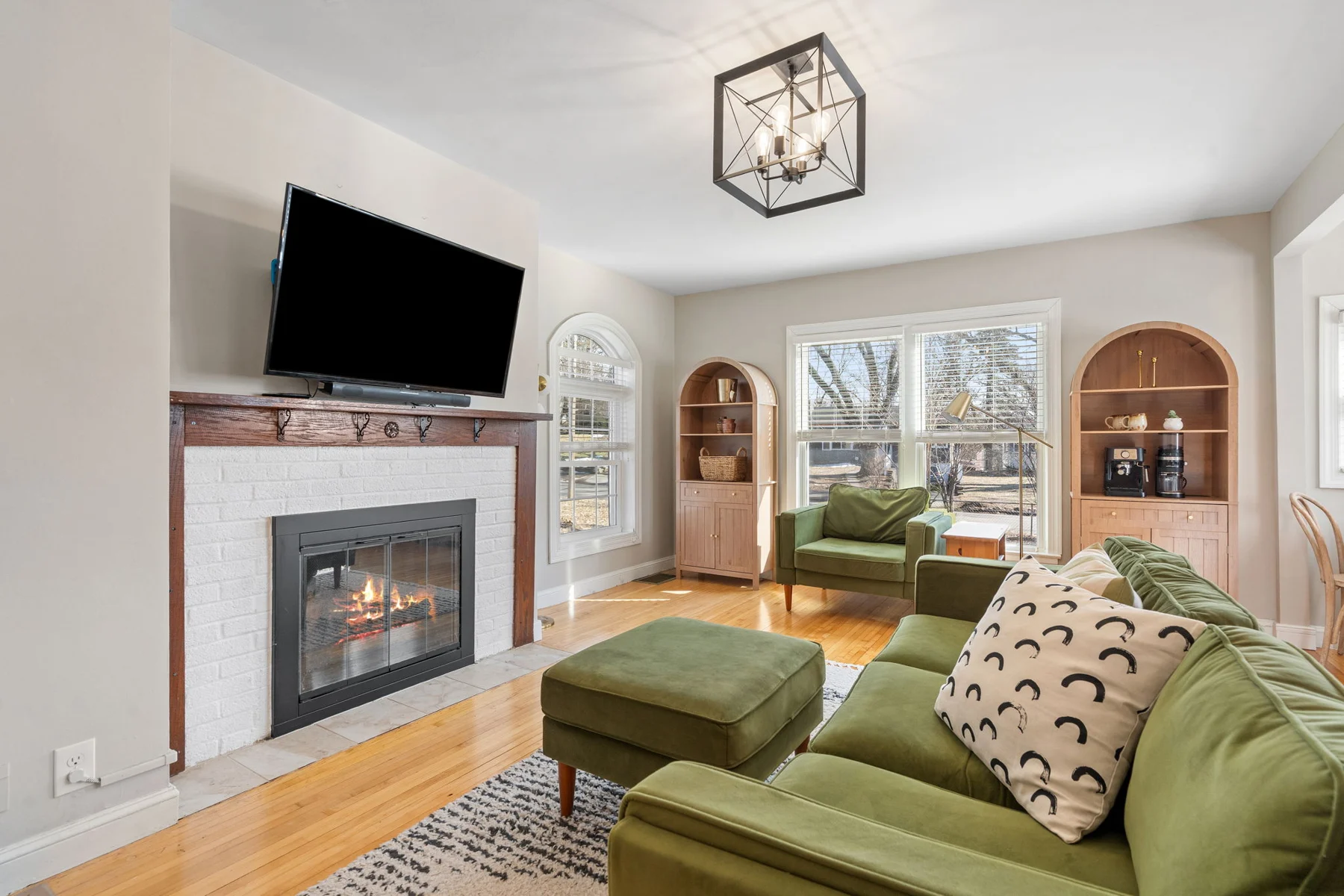
Broken-plan living creates distinct spaces while retaining connections between them. The best layout is the one that supports the people living in it—not simply the one that follows a trend or photographs beautifully.
For the better part of two decades, Americans have been paying contractors considerable sums of money to remove perfectly good walls.
We called it modernization. We called it creating flow. We called it opening up the space. And somewhere between the third demolished dining room and the installation of yet another enormous kitchen island, we became convinced that the pinnacle of domestic architecture was being able to see the refrigerator from practically anywhere in the house.
The transformation became so familiar that it developed its own choreography. A designer would gesture toward a wall separating the kitchen from the living room. Someone would wonder aloud whether it was load-bearing. A sledgehammer would appear, followed by dust, applause, and the triumphant reveal of a house that had apparently been liberated from the inconvenience of having rooms.
It was enormously satisfying television.
And for many homeowners, opening those spaces genuinely improved the way their houses functioned. Kitchens became more social, natural light traveled farther, and families could share the same space without necessarily doing the same thing. The appeal was real, and it remains real.
But somewhere along the way, a good design idea became something closer to a cultural commandment.
Walls were obstacles. Separate rooms were dated. An uninterrupted view from the front door to the kitchen island was a selling point, and the phrase open concept became one of the most reliable compliments a house could receive.
Now, rather deliciously, the design world would like to discuss bringing some of those walls back.
The emerging term is broken-plan living, an approach that introduces definition into open spaces through archways, partial partitions, built-ins, and rooms with more distinct identities. Last month, ELLE Decor highlighted broken floor plans among the interior design ideas gaining attention on TikTok, part of a broader conversation about privacy and the return of more intimate spaces.
The timing feels particularly revealing.
Because I don't think this is simply another decorating trend. I think it reflects something we've been reluctant to acknowledge about the way we design, photograph, market, and ultimately live in our homes.
We've become very good at creating houses that look beautiful when everyone is standing outside the frame.
Living in them is another matter.
The house as a performance
Open-concept living was originally about making domestic life less divided.
In older homes, the kitchen was often a working room, separated from spaces intended for entertaining or relaxing. Opening those areas allowed the person cooking to remain connected to guests, gave parents better sightlines to young children, and made some smaller houses feel considerably more generous.
Those were thoughtful architectural changes, responding to how people wanted to live.
But as open concept became the dominant ideal, another influence grew alongside it: the visual culture of real estate.
Today, we often fall in love with a house long before we walk through its front door. We encounter it through carefully composed photographs, beautifully lit videos, renovation reveals, and interiors shared across social media.
And an open-concept home is exceptionally good at making an impression.
From one carefully chosen angle, a photograph can capture the kitchen, dining area, fireplace, expansive windows, and perhaps a glimpse of the backyard. It communicates scale and continuity in a way that several smaller rooms rarely can.
The image feels aspirational. The house appears spacious, effortless, and beautifully organized.
What it doesn't reveal is how that same room functions on a Wednesday evening when the dishwasher is running, someone is making dinner, a teenager is watching television, and another person is trying to concentrate.
The room hasn't changed. The people have simply arrived.
I think this is one of the more interesting contradictions in contemporary home design. We've become increasingly sophisticated about how houses are presented, while sometimes giving surprisingly little consideration to what happens when the presentation ends.
A kitchen island can be an architectural centerpiece and a magnificent place to gather. It can also become the household's unofficial sorting station for backpacks, unopened mail, grocery bags, and everything nobody has quite put away.
A beautiful uninterrupted sightline can make a home feel expansive. It can also mean that the breakfast dishes remain part of the living room's visual landscape until someone deals with them.
We became so interested in what a house could reveal that we stopped appreciating what a room could conceal.
None of this is an argument against open-concept homes. It's simply the difference between looking at a space and occupying it.
And somewhere along the way, we began allowing the first experience to dictate the second.
When every room became the same room
The promise of open-concept living was togetherness.
The kitchen would no longer isolate the person preparing dinner. Parents could remain connected to children playing nearby. Guests could gather without being divided between separate rooms, and the household could function as one welcoming, fluid environment.
It's a lovely idea, and in many homes it works beautifully.
But togetherness is not the only thing people need from a house.
As families grow and routines change, the same openness that once felt liberating can begin to feel surprisingly demanding. Different activities compete for attention. Sound travels. Privacy becomes harder to find, and the ability to retreat from one another without retreating to a bedroom can feel like an unexpected luxury.
The way we live has changed considerably, even in the last few years. Our homes have become offices, classrooms, creative spaces, gathering places, and private retreats, often within the same twenty-four hours. And while we've become remarkably resourceful about adapting our rooms to accommodate all of it, we've also discovered that flexibility has its limits.
An open floor plan can be a magnificent place to entertain twenty people and a remarkably frustrating place for two people trying to participate in separate conference calls.
The contradiction isn't that we suddenly need more space. It's that we've been asking the same space to do too much.
But the issue extends beyond working from home.
We've increasingly asked the same spaces to serve every purpose. The kitchen island is the breakfast table, homework station, cocktail bar, and gathering place. The living room is also the media room, playroom, and occasional office. The dining area becomes whatever the household needs it to be that afternoon.
Flexibility is valuable, but there is a point at which asking a room to do everything begins to diminish the experience of doing anything particularly well.
There's something to be said for having a place where dinner feels different from breakfast, where conversation doesn't compete with the television, or where reading a book doesn't require negotiating with the noise of the kitchen.
These aren't necessarily extravagant spaces. They are simply rooms with distinct purposes.
And after years of treating defined rooms as inefficient, we're beginning to rediscover what they can offer.
The return of the room with a personality
The broken-floor-plan trend is interesting because it doesn't necessarily reject the benefits of open living.
Instead, it reintroduces the idea that different activities might deserve different environments.
A wide archway can preserve a visual connection between the kitchen and dining room while giving each space its own identity. A partial wall or built-in bookcase can create a sense of enclosure without making the house feel divided. Changes in lighting, ceiling treatment, or furniture arrangement can establish distinct areas within a larger room.
These details can be beautiful, but their real value lies in how they influence the experience of moving through a house.
A dining room can feel intimate rather than incidental. A sitting room can offer a quieter alternative to the main gathering space. A library or study can have a mood entirely its own.
And, perhaps most liberating of all, every room no longer has to participate in the same decorating scheme.
When the entire main floor is visible at once, homeowners often feel compelled to maintain one continuous aesthetic. The kitchen cabinets must work with the dining furniture. The dining furniture must relate to the living room. The colors, finishes, and lighting are expected to flow seamlessly from one area to the next.
That consistency can produce beautiful interiors. It can also produce a kind of carefully coordinated sameness.
Defined rooms allow for a different approach.
A dining room can be dramatic, with richly colored walls and an antique table. A sitting room can be softer and more relaxed. A study can be filled with books, collected objects, and furniture that has meaning rather than merely matching everything around it.
There is pleasure in a house that reveals itself gradually.
Not every beautiful space needs to be visible from the kitchen island.
The rooms we were taught to dismiss
I find it fascinating how many of the spaces returning to favor are rooms previous generations understood quite well.
The dining room. The study. The sitting room. The library.
Over time, we became accustomed to evaluating those rooms by how frequently they were used. A formal dining room that hosted only a handful of gatherings each year seemed wasteful. A separate living room could feel redundant. A small room dedicated to reading or conversation seemed indulgent when its square footage could be absorbed into a larger, more flexible space.
But usefulness isn't always measured by the number of hours a room is occupied.
A dining room can make an ordinary meal feel like an occasion. A separate sitting room can become a favorite place precisely because it isn't dominated by a television. A home office with a door can improve the experience of living in the entire house, even when nobody else enters it.
Rooms influence behavior. They establish rhythms, create transitions, and allow different parts of our lives to have different settings.
And the absence of those distinctions can change how we experience our homes in ways we don't immediately recognize.
There's a reason people love hotel libraries, intimate restaurants, quiet cafés, and beautifully designed little rooms tucked inside larger buildings. Those spaces have character because they aren't trying to accommodate every possible activity.
They offer an atmosphere.
At home, we've sometimes treated that kind of distinction as unnecessary, even while seeking it out everywhere else.
Perhaps that's part of what makes this design shift so appealing. It isn't simply about bringing back walls. It's about giving rooms permission to have identities again.
The real estate industry helped create this obsession
Here's where I think the conversation deserves a little discomfort.
Real estate has played a role in turning open-concept living from a desirable feature into something resembling a universal expectation.
We've used phrases like open and airy, ideal for entertaining, and seamless flow so frequently that they've become part of the language buyers use to describe a good house.
And those descriptions can be entirely appropriate.
But language shapes expectations.
When we consistently describe openness as an advantage, we subtly suggest that houses offering something different are less desirable. A traditional floor plan may have beautiful proportions, excellent separation between public and private spaces, and rooms that function exceptionally well. Yet if we introduce it as a house that could be opened up, we've already implied that its existing architecture is somehow incomplete.
I've walked through enough homes to appreciate how strongly buyers can be influenced by the transformations they've seen in renovation shows, design magazines, and social media.
Sometimes a buyer enters a traditional home and immediately begins imagining which walls could be removed, before fully considering why the rooms were arranged that way in the first place.
It's understandable. We've watched that particular transformation hundreds of times. The solution feels obvious because we've been taught to recognize the problem.
But a wall isn't necessarily a problem simply because removing it is possible.
An older dining room may have wonderful proportions and natural light that would be diminished rather than improved by incorporating it into another space. A defined living room may offer the kind of comfort and intimacy that becomes difficult to recreate in a much larger great room. A traditional floor plan may provide exactly the separation a household needs, even if it doesn't resemble the houses dominating social media.
None of this means buyers should avoid opening up older homes. Some renovations genuinely transform the way a house functions.
It means that before changing the architecture, it's worth understanding the experience we're hoping to create.
The most effective renovation isn't necessarily the one that produces the most dramatic before-and-after photograph. It's the one that makes the home more enjoyable to occupy long after the novelty of the transformation has worn off.
And I think that's an important distinction for buyers and homeowners alike.
Are we renovating our homes for people who don't live in them?
There's another contradiction worth considering.
Homeowners are often encouraged to make decisions with resale value in mind, even when they have no immediate plans to sell.
That's reasonable to a point. Major renovations are expensive, and it's wise to understand how an investment might affect a property's future appeal.
But somewhere between choosing a paint color and redesigning an entire floor plan, the imaginary future buyer can begin to have an extraordinary amount of influence over a house they don't own.
We remove a dining room because buyers supposedly want open concept. We hesitate to choose a bold color because someone might not like it. We select finishes intended to appeal to the broadest possible audience.
Then we spend years living inside those decisions.
The irony is that buyer preferences aren't permanent. The very features we once described as essential can become the subject of the next design debate.
And when that happens, homeowners who made expensive changes to follow the last trend may find themselves wondering whether they should follow the new one.
I think this is where the conversation becomes more meaningful than whether archways are fashionable again.
We've become so accustomed to considering how a home will be perceived that we sometimes forget to ask how it should be experienced.
A home should certainly be maintained, and major renovations deserve thoughtful planning. But living well in a house has value, too.
The goal shouldn't be to predict every future buyer's taste.
It should be to create a home that functions beautifully, respects its architecture, and makes sense for the life being lived within it.
Maybe the walls weren't the problem
I don't believe open-concept living is disappearing, nor do I think it should.
There are wonderful houses with expansive shared spaces, and there are wonderful houses with distinct rooms. There are awkward examples of both. The success of a floor plan has far more to do with thoughtful design and the people occupying it than with whether a particular wall exists.
What interests me about the broken-plan conversation is the possibility that we're beginning to question the idea of one universally desirable home.
For years, the most fashionable interiors emphasized openness, continuity, and the ability to see everything at once. Now we're seeing renewed appreciation for intimacy, privacy, architectural detail, and rooms with distinct identities.
It's tempting to treat that as a reversal. I think it may be something more useful: a reminder that homes should accommodate the complexity of real life rather than the simplicity of a design trend.
We don't need to rebuild every wall we've removed. And we certainly don't need to start renovating perfectly functional open-concept homes simply because a new design movement has arrived.
That would be repeating the same mistake in reverse.
Perhaps the most interesting thing about the return of walls isn't that we're rediscovering privacy. It's that we're beginning to reconsider whom we've been designing our homes to impress.
For years, we opened our houses to make them look more expansive, more modern, more desirable. We wanted the kind of rooms that made people stop scrolling, admire the photograph, and imagine a beautiful life unfolding inside.
Now, perhaps, we're remembering that the people who matter most aren't the ones looking at the photographs.
They're the ones living in the house.
And sometimes, they'd simply like to close the door.
THE HOME EDIT
Thoughtful perspectives on design, living well, and the places we call home.
Kara Zahasky | REALTOR®
eXp Realty | The Antonov Group
RealtorKara.com
The Kara Edit — Real estate insight, local perspective, and the art of feeling at home.